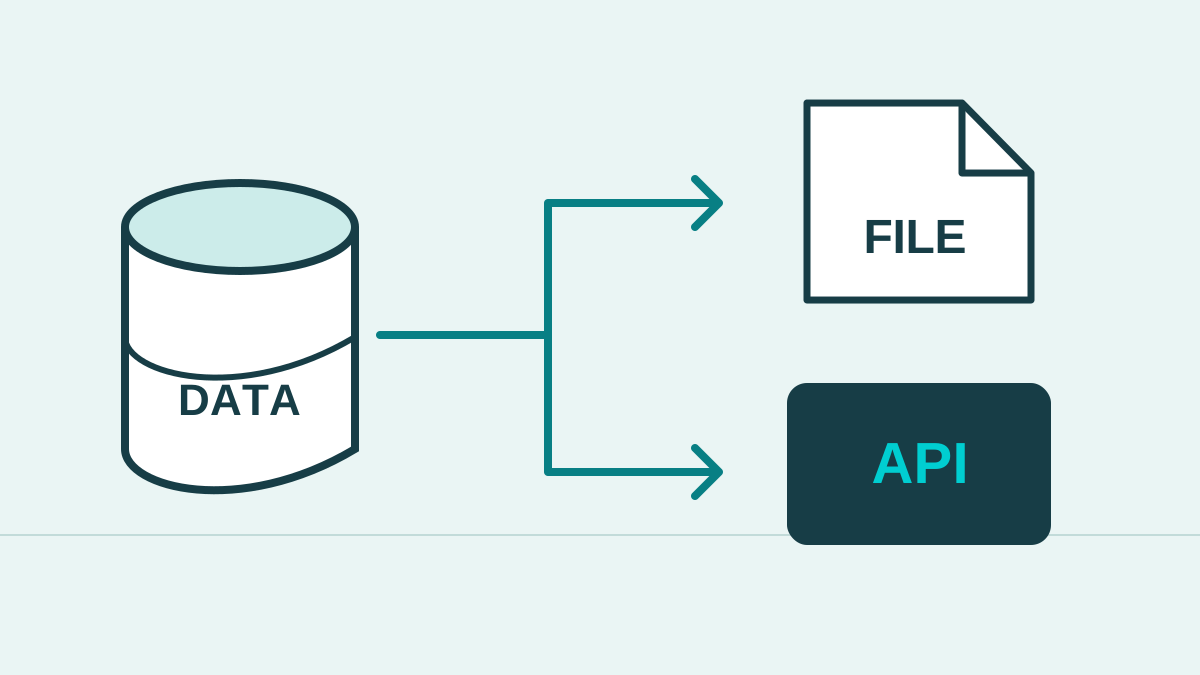
A distributor updating a catalogue in batches and a website retrieving information during a customer search may need the same data, but not the same delivery method. Start with the workflow and the update cycle the business needs.
Both files and APIs require agreement on data coverage, identifier formats and permitted use. Changing the delivery method does not improve information that has not been checked.
What is the difference?
File delivery, such as CSV or an agreed table format, provides a dataset for import into the recipient’s catalogue or database. The parties need to agree the delivery schedule, file version and treatment of changes.
API access lets a system request information within the scope the provider exposes. An HTTP-based API has requests, responses and status codes for the development team to handle. API access does not automatically mean every data type is available or that updates are immediate.
Compare the work involved
| Consideration | Files | API |
|---|---|---|
| Main workflow | Import a dataset for use in your own system | Request information during a system process or user workflow |
| Update frequency | Depends on delivery and import schedules | Depends on the source, its update cycle and how your system stores results |
| Development work | Read, validate and import the file | Authenticate, request data and handle responses or errors |
| Delivery problems | Check missing files, format changes and import results | Handle connection failures, request limits and retries |
| Terms to agree | File format, identifiers, data versions and change reporting | Coverage, permissions, request volumes, API versions and change notifications |
Match the method to the workflow
A catalogue updated on a schedule: If the team already has an import and validation process, files may be a manageable starting point. Test a real sample in the destination system before agreeing the format.
A website or sales system retrieving data during use: An API may suit the workflow if its coverage meets the need and a team can maintain the connection. Assess request volumes and what should happen when the provider is unavailable.
An initial dataset followed by ongoing changes: A file could establish the starting dataset, with an API supplying changes, if the provider supports this and identifiers and versions remain consistent. A combined approach must be designed together; it is not available with every service.
Questions to answer before connecting
- Will the data be used for search, product display, analysis or sharing with partners?
- Is the complete dataset needed, or only selected records?
- How old can the information be, and how often is the source updated?
- Who owns importing, validation and changes to the format?
- Do the agreed rights allow local copies or redistribution?
Development teams should also ask about request limits, pagination, empty results and retries. HTTP 429, for example, signals too many requests. The integration should follow the provider’s handling rules rather than retrying immediately without a limit.
Check the readiness of your product data and reference numbers before connecting. Auto Intelligence provides API integration services, agreeing data coverage and connection requirements with the customer before work begins.